
Modern parents often ask, “How much screen time is okay for young children, and how do I balance it with real play?”
The short answer is: Children under five should have minimal screen time, real play, sensory, physical, social, and hands-on should make up most of their day. Real play builds brain development, language, social skills, emotional regulation, and independence. Screens can be helpful for learning when used in moderation, but excessive exposure can delay development, disrupt sleep, and reduce imagination.
In this blog, we break down what healthy screen time looks like, why real play matters more, how to set boundaries, and what Montessori-inspired homes and daycares do to limit screens.
What Is the Right Amount of Screen Time for Young Children?
“How much screen time should my toddler have?”
“Are educational videos okay?”
According to child development experts, here’s the general guideline:
- Under 18 months: Avoid screens altogether (except video calls).
- 18–24 months: Minimal educational content, watched together with an adult.
- Ages 2–5: No more than one hour per day, and preferably high-quality content.
- Ages 6+: Screen time should be balanced with sleep, physical activity, and real play.
But the real question is not just “how much?”, but “how screens affect learning and development.”
Screens can be helpful in moderation, but they should never replace real play, active learning, or parent-child bonding.
Why Real Play Matters More Than Screen Time?
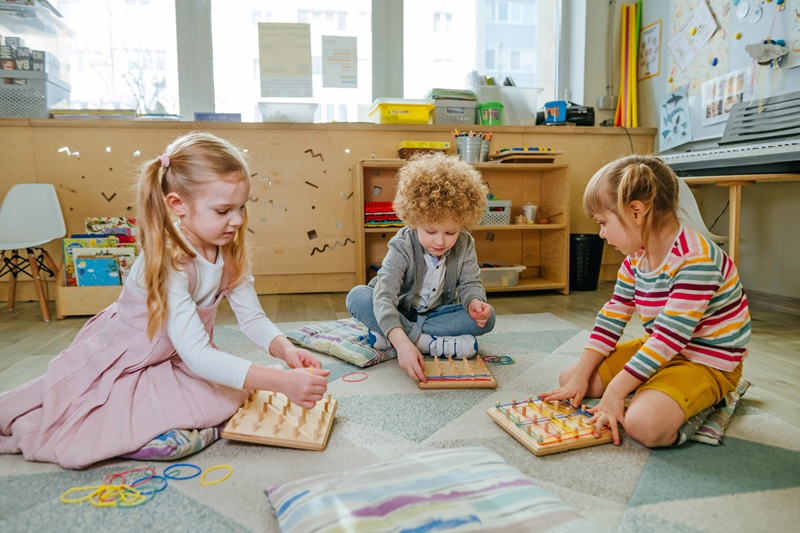
Young children learn best through touch, movement, exploration, and interaction with the real world. This is the foundation of Montessori education and early childhood development.
Real play is any activity that engages the child physically, emotionally, socially, and creatively.
This includes:
- Outdoor play
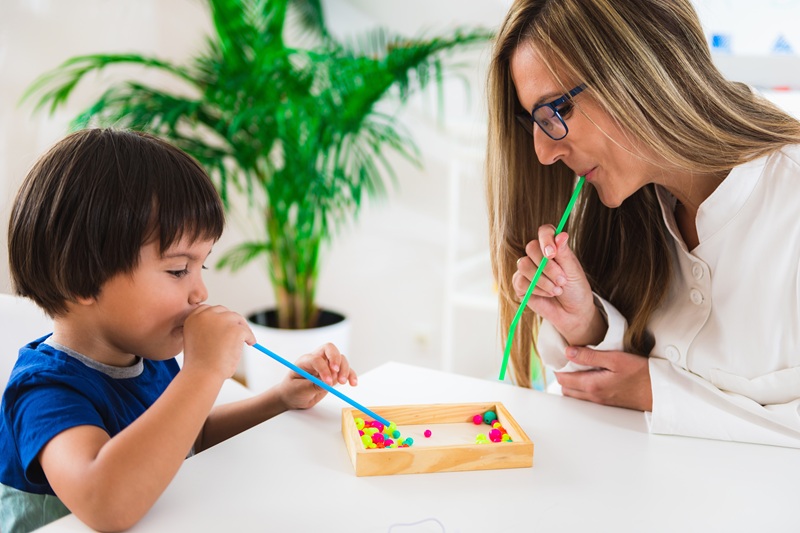
- Sensory activities
- Pretend play
- Building toys
- Art and crafts
- Cooking and practical life tasks
- Montessori materials
- Music and movement
Screens stimulate only two senses: sight and hearing.
Real play stimulates all senses, helping children form deeper connections and stronger brain pathways.
How Screens Affect Young Children: What Parents Need to Know?
Screens aren’t “bad,” but too much exposure has been linked to several developmental concerns.
1. Impact on Attention and Focus
Fast-changing images overload the brain, making it harder for young children to concentrate during slow-paced, real-world tasks.
2. Delayed Language Development
Honest conversations, storytelling, and interactions build language — screens do not replace that.
3. Reduced Social Skills
Children need face-to-face play to understand emotions, body language, and social cues.
4. Sleep Disruption
Blue light affects melatonin production, making it difficult for children to fall asleep.
5. Less Creativity & Imagination
Screens tell the child what to see. Real play lets the child imagine, build, and create.
6. Increased Irritability
Overstimulation often leads to tantrums, restlessness, and difficulty transitioning away from screens.
Moderation is key — screens should support learning, not dominate it.
How Real Play Supports Healthy Development (Montessori Approach)?
Montessori and early childhood experts emphasize hands-on, real-world learning.
Here’s why real play is essential:
1. Builds Physical Skills
Running, climbing, pouring, sorting, and building develop gross and fine-motor skills.
2. Strengthens Cognitive Development
Problem-solving, puzzles, sorting, and open-ended activities help children think independently.
3. Boosts Emotional Intelligence
Real play teaches patience, turn-taking, coping skills, and emotional regulation.
4. Encourages Independence
Practical life activities — dressing, setting the table, cleaning — build confidence.
5. Supports Social Skills
Cooperative play teaches sharing, empathy, and communication.
Screens cannot replace the richness of hands-on, authentic experiences.
How to Balance Screen Time and Real Play (Simple Strategies for Parents)?
The goal isn’t to eliminate screens — it’s to create a healthy balance. Here’s how modern families can do that.
1. Create a Screen-Time Routine
Children do best with predictable limits. For example:
- 20 minutes after school
- Only on weekends
- Only high-quality educational content
- Consistency reduces power struggles.
2. Use the 80/20 Rule
Ensure children spend 80% of their time in real play and 20% or less on screens.
3. Make Screens a Shared Experience
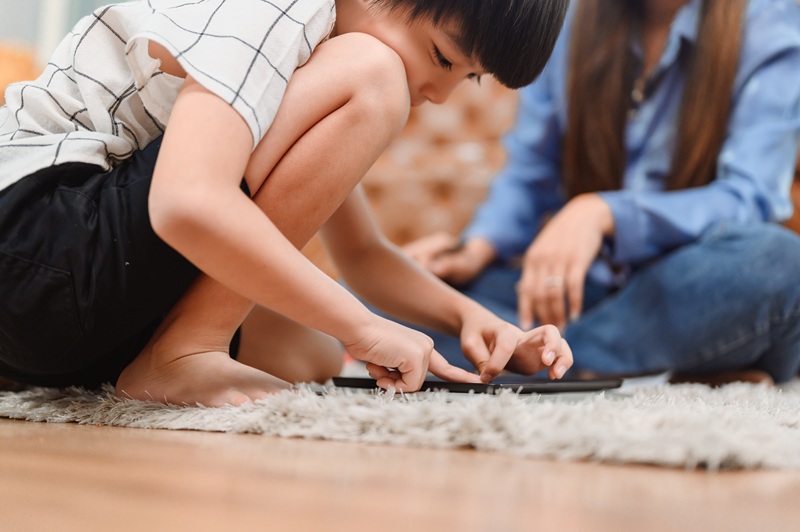
Sit with your child and talk about what they see.
This turns passive watching into interactive learning.
4. Keep Screens Out of Bedrooms
Bedrooms should support sleep, not stimulation.
5. Replace Screen Time With Engaging Real Play Options
Set up play invitations such as:
- A sensory bin
- Blocks or building toys
- Sorting trays
- Art supplies
- Montessori-inspired shelves
- Children choose real play when the environment encourages it.
6. Model Healthy Digital Behaviour
If adults scroll often, children learn the same pattern.
Set family screen-free times, like:
- During meals
- Before bedtime
- Family outings
7. Encourage Outdoor Play Daily
Even 20 minutes outside can improve mood, focus, and sleep.
8. Avoid Screens Before Bed
At least 1 hour without screens before bed supports better rest and brain development.
Montessori’s Approach to Limiting Screen Time
Montessori philosophy emphasizes:
- Real objects over digital ones
- Physical movement over passive watching
- Social interaction over isolated screen use
In Montessori classrooms and high-quality dayhomes like Little Champs Montessori:
- Children explore real materials
- Hands-on learning replaces digital learning.
- Educators focus on sensory activities, practical skills, and nature-based experiences.
This helps children develop healthier habits and a deeper foundation for learning.
How Parents Can Replace Screen Time With Simple, Fun Activities?
Here are easy, screen-free alternatives:
1. Nature Walks & Outdoor Exploration
Collect rocks, leaves, or pinecones.
Encourage jumping, climbing, and balancing.
2. Practical Life Tasks
Let children help with:
- Washing veggies
- Setting the table
- Watering plant
- Folding laundry
3. Creative Play
Drawing, painting, clay modelling, or building with blocks.
4. Reading Together
Even 10 minutes of daily reading can dramatically improve vocabulary.
5. Sensory Activities
Rice bins, water pouring, playdough, or textured objects.
6. Pretend Play
Tea sets, dolls, pretend cooking, doctor kits — imagination grows here.
These activities naturally replace excessive screen use.
Why Balanced Media Use Creates Healthier, Happier Children
Children don’t need a screen-free life.
They need a balanced life — one where real play, family connection, hands-on learning, and outdoor activity take the lead.
When parents set clear screen-time boundaries, children:
- Sleep better Communicate more
- Play independently
- Handle emotions better
- Build stronger brains
- Become more curious and creative.
This balance prepares them for school, friendships, and lifelong learning.
FAQs:
How much screen time is healthy for toddlers?
For ages 2–5, no more than one hour per day of high-quality content.
Are educational cartoons suitable for children?
They can help when used in moderation and watched with a parent.
Does screen time affect speech?
Yes. Excessive screen time can delay language development.
Should Montessori homes avoid screens completely?
Not necessarily — but screens should be limited and never replace honest exploration.
Contact Little Champs Montessori Childcare Inc.
If you’re looking for a licensed, nurturing Montessori dayhome in Calgary NW, here are the details:
📞 Phone: 403-313-7886
📧 Email: info@littlechampsmontessori.com
📍 Address: 82 Rockbluff Close NW, Calgary, AB T3G 5B2, Canada