
Outdoor and nature-based activities help young children grow emotionally, socially, physically, and cognitively by letting them explore, play, and learn in real environments. In early childhood, nature play improves focus, creativity, coordination, confidence, emotional regulation, and problem-solving skills. It also supports Montessori principles by encouraging hands-on, real-world, child-led learning.
If you’ve ever wondered why outdoor play matters, how nature-based learning works, or what benefits it offers your toddler or preschooler, this blog breaks everything down clearly—just like parents search for it online.
What Are Outdoor & Nature-Based Activities?
Outdoor and nature-based activities are learning experiences that take place outside the classroom. These activities encourage children to explore their natural surroundings through movement, observation, and hands-on interaction.
Examples include:
- Collecting leaves, rocks, or sticks
- Gardening and watering plants
- Playing in sand, mud, or water
- Running, climbing, or jumping in open spaces
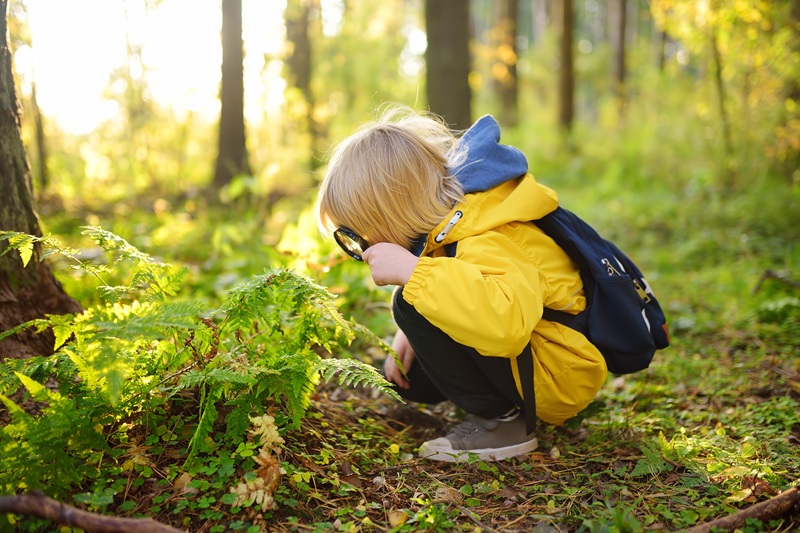
- Observing insects, birds, or flowers
- Outdoor storytelling or reading time
- Nature walks and scavenger hunts.
These experiences are simple but extremely powerful for young minds.
Why Outdoor Activities Matter in Early Childhood Development?
Nature is a complete learning environment. It stimulates the senses, encourages curiosity, and teaches children how the world works in a way that screens or worksheets cannot.
Below are the key developmental benefits.
1. Outdoor Play Improves Physical Development
Kids naturally stay more active outdoors. This helps them develop stronger:
- Muscles
- Bones
- Coordination
- Balance
- Gross motor skills
Running, climbing, jumping, and lifting objects all contribute to healthy physical growth.
Why it matters:
Physical development during the early years shapes long-term health, confidence, and mobility.
2. Nature Helps Children Regulate Emotions
Being outdoors lowers stress and anxiety—even for young children. The natural environment creates a calming effect that helps kids:
- Relax
- Focus
- Express emotions safely
- Reset after overstimulation
Many parents notice that tantrums decrease when kids get more outdoor time.
Why it matters:
Emotional regulation is the foundation of healthy relationships and of readiness to learn.
3. Outdoor Activities Strengthen Cognitive Skills
Nature-based learning helps children develop:
- Problem-solving abilities
- Critical thinking
- Observation skills
- Spatial awareness
- Concentration
Montessori philosophy also emphasizes real-world exploration, which fosters cognitive growth by allowing children to learn through discovery.
4. Outdoor Play Boosts Creativity & Imagination
Unlike toys with fixed functions, nature offers “open-ended materials”—leaves, sand, sticks, stones—that children can use any way they want.
This encourages:
- Imaginative play
- Story creation
- Creative thinking
- Independent decision-making
When a child builds a “bridge” from sticks, they’re practicing engineering thinking without even knowing it.
5. Nature Encourages Social Skills & Cooperation
Outdoor areas offer more space for children to interact naturally. Kids learn to:
- Share
- Take turns
- Work as a team
- Solve conflicts
- Communicate better
Playing or exploring outdoors often requires collaboration, which builds strong social foundations.
6. Outdoor Learning Builds Confidence & Independence
When children explore nature freely, they take small, healthy risks—like climbing a low rock or balancing on a log.
This helps them learn:
- What they are capable of
- How to make safe decisions
- How to trust their own judgment
Montessori environments intentionally include “safe challenges” to help children gain independence.
7. Nature Teaches Respect for the Environment
Children who spend time outdoors learn to appreciate and care for nature. They understand:
- Where plants come from
- How insects help the environment
- Why do we protect our planet?
This builds lifelong environmental awareness.
How Montessori Supports Outdoor & Nature-Based Learning?
Montessori education views nature as a teacher. Dr. Maria Montessori believed that outdoor spaces should be an extension of the classroom.
A Montessori-inspired outdoor environment includes:
- Real gardening tools
- Sensory trays (sand, water, soil)
- Practical life activities (sweeping, watering plants)
- Natural objects for sorting and exploration
- Freedom to move and choose activities
This approach helps children connect learning with the real world.
How Parents Can Encourage Outdoor Learning at Home?
You don’t need a large backyard or expensive tools. Simple activities support nature-based learning effectively.
Try these at home:
- Collect small nature items and create a “nature basket.”
- Do short nature walks and identify birds or plants
- Let children help water plants.
- Encourage mud or water play.y
- Provide safe outdoor tools (small rake, bucket, scoop)
- Create a small home garden or herb pot.
- Move story time outdoors.
Even 20–30 minutes a day can make a huge impact.
Why Outdoor Learning Is More Important Than Ever?
With rising screen time and reduced outdoor activity, modern children spend significantly less time in nature than previous generations.
Outdoor play helps balance:
- Mental stimulation
- Physical movement
- Emotional well-being
- Social growth
Nature gives children space to think, breathe, explore, and simply be children.
FAQs:
How much outdoor time should young children get?
Experts recommend at least 1–3 hours daily, depending on age and weather.
What if the weather is bad?
Light rain or cold weather is still safe with proper clothing. Only extreme conditions require staying indoors.
Is outdoor play safe for toddlers?
Yes—supervised outdoor play is safe and helps toddlers build confidence and skills.
Does nature-based learning replace classroom learning?
No—it complements it. Outdoor learning adds hands-on experiences that support academic learning.
Contact Little Champs Montessori Childcare Inc.
If you’re looking for a licensed, nurturing Montessori dayhome in Calgary NW, here are the details:
📞 Phone: 403-313-7886
📧 Email: info@littlechampsmontessori.com
📍 Address: 82 Rockbluff Close NW, Calgary, AB T3G 5B2, Canada